You’re currently on our international website. US customers, please shop our US website.

History of Kohl

Hi beauties,

Across thousands of years and countless cultures, people have been compelled to line their eyes with black. Alongside ochre, black was among the very first decorative colours humans ever used: featuring in cave paintings dating as far back as the Paleolithic period. There’s something deeply instinctive about it. The eyes have always carried power, emotion, and mystery....so it’s no surprise we’ve always wanted to accentuate them.

A universal ritual...

Kohl, as we know it, is most famously associated with Ancient Egypt. When I visited museums and studied artefacts, I was struck by how universal it was, worn by men and women of all social standings. Excavations have uncovered everything from the simplest jars and reeds to exquisitely detailed containers, all used to house and apply kohl.

Image: c. 1635–1458 B.C. Upper Egypt, Metropolitan Museum of Art (The MET)

Ancient innovation

What’s extraordinary is how sophisticated it was. Egyptian kohl was often a complex blend of ingredients - ground minerals like antimony, lead ores, ash, burnt almonds and copper compounds - mixed into rich black or smoky grey pigments. These were applied along the waterline and around the eyes using specially designed applicators, not unlike some we still use today.

Image: Egyptian mineral pigments 1390–1353 B.C. Metropolitan Museum of Art (The MET)

Beauty, protection and power

And it wasn’t just about beauty. There’s strong evidence that kohl served a practical purpose, helping to protect the eyes from harsh sunlight, dust, and even infection in arid climates. At the same time, it carried deep spiritual meaning. The heavily lined eye is often linked to the Eye of Horus, a symbol of protection, while green malachite pigments were associated with Hathor, the goddess of beauty and joy.

Image: Eye of Horus necklace, found in the tomb of Tutankhamun, Matt Davies

A journey across civilisations...

As kohl travelled across cultures, from Persia and the Middle East to Greece, Rome and beyond, it evolved, but its significance remained. In many regions, it was ritualistic, medicinal, and symbolic all at once. Even today, in parts of the world, it continues to be an important cultural tradition.

Image: c. 300-400 A.D. Roman Syria, glass double kohl tube

The 1920s revival of kohl...

Interestingly, after falling out of favour in Europe for over a thousand years, kohl made a dramatic return in the 1920s. The discovery of Tutankhamen’s tomb sparked a global fascination with Ancient Egypt, while Hollywood icons like Theda Bara brought those intensely lined, smouldering eyes to life on screen. Since then, the kohl look has never really left us, reappearing again and again, from grunge to glamour, always relevant.

Image: Fox Film Corporation, Theda Bara in the American film Cleopatra (1917)
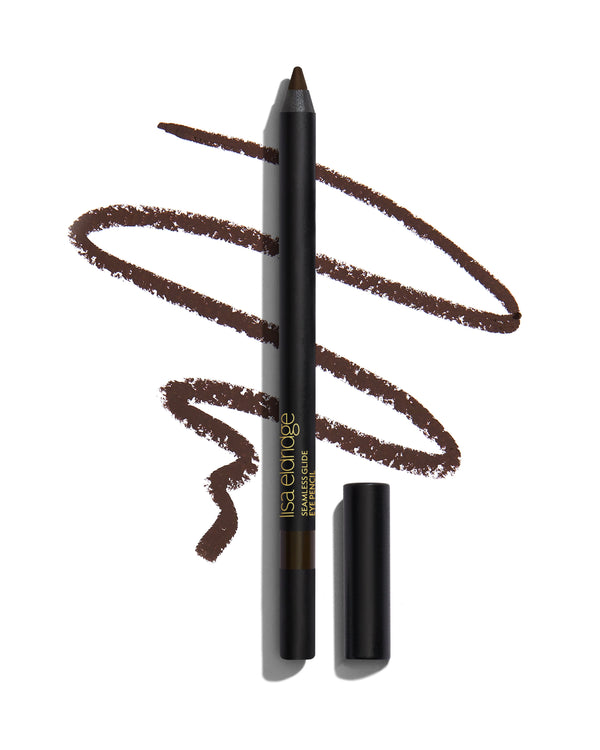
Seamless Glide Eye Pencils

An enduring obsession

Throughout history, trends and techniques have changed - but our desire to frame and intensify the eyes has remained constant.

Creating Seamless Glide Eye Pencils was my way of contributing to this incredible story. I wanted to capture everything I love about traditional kohl - that softness, that richness, that sensual glide - but reimagine it in a modern, long-wearing formula that’s effortless to use. It’s my tribute to a ritual that spans thousands of years, cultures and continents… and one that I know so many of us still love today.

Love,

Lisa Xx

My Portfolio
My Products, As Seen On Screen
My Videos

×